
Bread making is a time-honored art that combines age-old traditions with modern innovations to create a variety of delicious, wholesome loaves. It may seem intimidating at first, but learning how to bake bread at home can be incredibly rewarding, allowing you to experiment with different flavors and textures while filling your kitchen with a warm, inviting aroma. From understanding basic ingredients and mastering essential techniques to troubleshooting common issues, this guide will help you navigate the wonderful world of bread baking, honing your skills and expanding your culinary repertoire.
Often regarded as one of life's most basic staples, bread has a rich history that spans numerous cultures, continents, and millennia. At its core, bread baking involves the combination of flour, water, yeast, and salt, resulting in a transformation via fermentation, kneading, and baking. With a seemingly limitless number of variations in terms of ingredients, flavorings, shapes, and sizes, there is no shortage of possibilities to explore when it comes to making bread. Whatever your preference, be it a hearty whole-grain loaf or a delicate, airy focaccia, learning the fundamentals of bread baking ensures a satisfying and enjoyable baking experience.
By understanding the science and art behind bread making, you'll be well equipped to tackle a multitude of recipes and techniques. As you embark on this journey, remember that practice makes perfect – and with a bit of persistence, you'll be baking mouth-watering loaves that are bound to impress friends, family, and most importantly, yourself.
Learn more about cooking with our How Tos today!
Baking bread is both an art and a science, and it's essential to understand the basics before diving in. One of the key factors in bread baking is the yeast, which aids in fermentation and gives bread its lift. To ensure the yeast is still alive, proof it by dissolving it in warm water (around 110ºF) with 1/2 teaspoon of sugar.
In addition to yeast, water plays a critical role in bread making. It activates the yeast for the process of fermentation and allows gluten molecules in the flour to uncoil and lengthen when the dough is mixed. Starches in the flour attract water and then gelatinize when heated, contributing to the final texture of the bread.
Here are a few tips to enhance your bread-making experience:
Additionally, practice is key when it comes to perfecting your bread-baking technique. Don't be discouraged if your first few attempts don't yield the desired results – with time and patience, you'll be well on your way to mastering the art of baking the perfect loaf of bread.
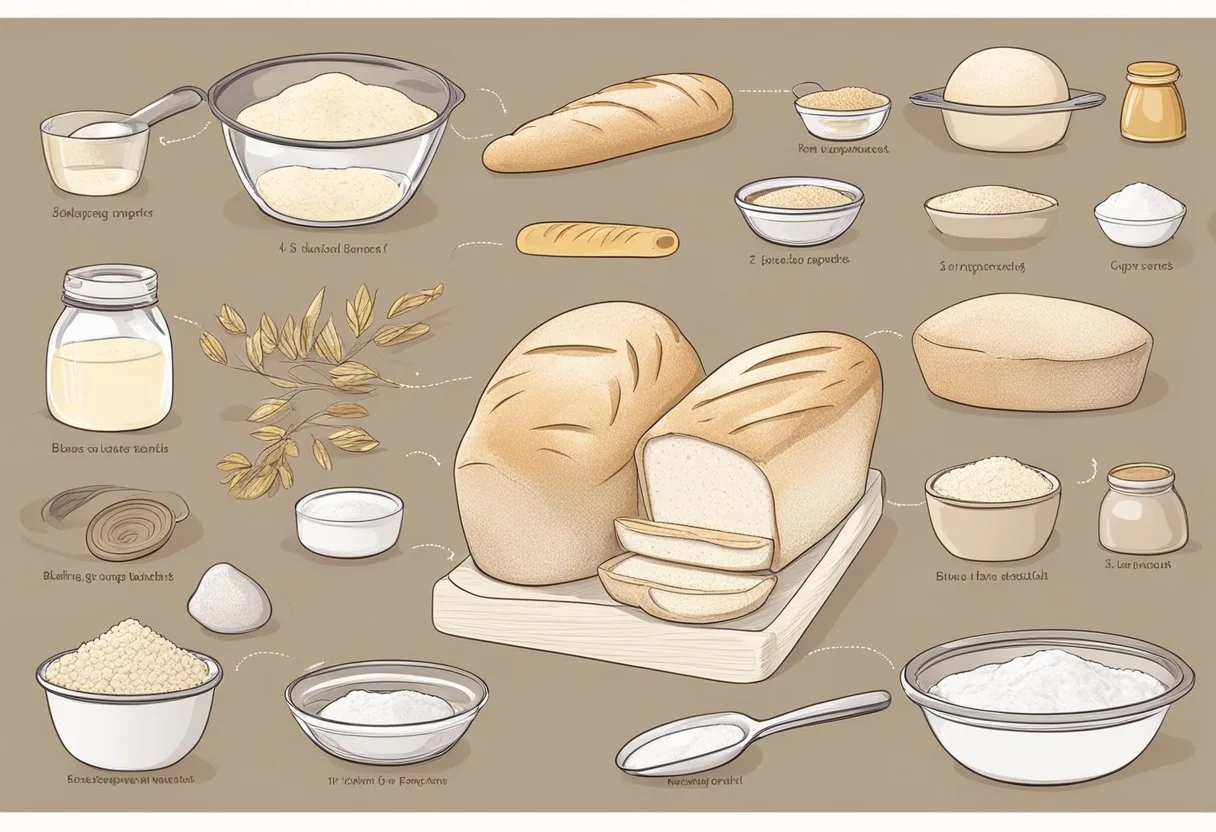
In this section, we will discuss the essential ingredients needed to bake a perfect loaf of bread. These ingredients include Bread Flour, Yeast, Water, Salt, and Sugar.
Bread flour is a high-protein flour that helps create a proper gluten structure for your bread, yielding a chewy and elastic crumb. Typically, this type of flour contains around 12-14% protein, which is higher than all-purpose flour. For a basic bread recipe, you will need approximately 6-1/4 to 6-3/4 cups of bread flour.
Yeast is a single-celled organism crucial in the bread-making process, as it's responsible for the fermentation and leavening of the dough. The most commonly used yeast for bread baking is active dry yeast. For a standard bread recipe, 1 package (1/4 ounce) of active dry yeast is required. To activate the yeast, you will need to dissolve it in warm water (around 110°F to 115°F) with a small amount of sugar.
Water is another vital ingredient for bread-making as it helps bind the ingredients and hydrate the flour to produce a cohesive dough. It's crucial to use warm water for bread-making, as it helps activate the yeast. For a standard bread recipe, use approximately 2-1/4 cups of warm water. Be careful not to use water that is too hot or too cold, as this can adversely affect the yeast and dough.
Although it might seem like a minor ingredient, salt is crucial in creating a well-flavored and balanced loaf of bread. It also contributes to dough structure and shelf life. Generally, you will need to use 1 tablespoon of salt for a basic bread recipe.
Sugar serves two primary purposes in bread-making: providing a food source for the yeast to feed on and adding a touch of sweetness to the bread. For a basic bread recipe, use 3 tablespoons plus 1/2 teaspoon of sugar. Dissolve the sugar with yeast when activating it in warm water for optimal results.
A reliable oven is essential for successful bread baking. Ensure your oven can maintain consistent temperatures and avoid any hot spots that could result in uneven baking. Preheat the oven to the required temperature, generally around 350°F to 450°F, depending on the type of bread being baked.
Use a large mixing bowl made of durable material like stainless steel or glass to mix your bread dough. The size of the bowl is important to provide enough space for the dough to properly form and rise. Mixing bowls with non-slip bases can also be helpful for preventing spills and making the kneading process easier.
Accurate measuring of ingredients is crucial when it comes to successful bread baking. For precision, use a digital kitchen scale to weigh essential ingredients like flour, water, and yeast. Measuring cups and spoons can be used for other ingredients like salt, sugar, and oil. When measuring flour, lightly spoon it into the measuring cup and level it off with the flat side of a knife to ensure accuracy.
Baking sheets and pans come in a variety of styles and materials, but a heavy-duty, non-stick option is recommended for bread baking. Alternatively, a preheated Dutch oven or a baking stone can be used for a more even and consistent heat distribution, resulting in a crisp crust and well-baked interior. When using a baking sheet or pan, consider using parchment paper to prevent the bread from sticking and for easy clean-up.
Remember to use oven mitts when handling hot bakeware and always follow the recommended baking times and temperatures to achieve the best results.
To start, make sure to measure your ingredients accurately. Lightly mix up your flour in its bin or bag to aerate it. Then, use a scoop to pour it into measuring cups, leveling off any excess with a straightedge. Once you have your ingredients measured, combine 1 package (1/4 ounce) of active dry yeast, 2-1/4 cups of warm water (about 110°F), 2 tablespoons + 1/2 teaspoon of sugar, 1 tablespoon of salt, 2 tablespoons of canola oil, and 6-1/4 to 6-3/4 cups of bread flour.
Mix the ingredients, gradually adding flour until a soft dough forms. Make sure to mix it gently and consistently, but don't overmix, as it may affect the dough's texture and rise.
Once your dough has formed, it's time to knead it. Turn the dough onto a lightly floured surface and use the heel of your hand to press and fold it repeatedly until it's smooth and elastic. This process should take about 6-8 minutes. Kneading helps develop gluten, which gives bread its structure and chewy texture. If the dough becomes too sticky, add a small amount of flour to prevent it from sticking to your hands or the surface.
After kneading, place the dough into a lightly oiled bowl and turn it once to coat it in oil. This step prevents the dough from forming a skin while proofing. Cover the bowl with plastic wrap or a damp cloth and allow it to rise in a warm, draft-free location until it has doubled in size. This first proofing usually takes about 1 to 1-1/2 hours, depending on the temperature and humidity. Remember that patience is key - allowing your dough to rise properly before shaping it will result in better texture and flavor.
During this stage, you may also store the dough in the refrigerator to slow down the rise. If you choose to do so, reduce the amount of yeast by half, and make sure to cover the dough with plastic wrap. This method allows you to prepare the dough a day in advance if needed.
Before shaping the dough, ensure that it has been properly kneaded, rested, and risen. This will allow the dough to develop the right texture and elasticity required for shaping.
Step 1: Turn the dough onto a clean, lightly floured surface. Press or roll the dough into a flat, even shape. You may choose to shape it into a rectangular shape for a loaf or a circular shape for a round bread.
Step 2: To shape a loaf, fold one side of the dough towards the center, followed by the opposite side. You may need to repeat this process until the dough is tightened up. For a round bread, or boule, fold the edges of the dough towards its center to create tension.
Step 3: Gently roll the shaped dough, applying even pressure and creating a smooth surface. Use the palms of your hands to shape the dough, making sure to keep the tension while not overworking it.
If you are using a loaf pan, ensure that the dough is placed into a greased pan with the seam side down. You may want to use common dough weights for different pan sizes:
| Pan Size | Dough Weight |
|---|---|
| 9 x 5 in | 17 - 25 ounces |
| 8 x 4 in | 12 - 16 ounces |
Let the shaped dough rise again for a specified amount of time (usually 45 minutes to an hour) before putting it into a preheated oven to bake. Remember to steam your oven for a crispy crust and to ensure proper browning and even cooking.
Final proofing, also known as the second rise or final fermentation, is a crucial step in baking bread. During this stage, the dough continues to ferment, building acidity and increasing its volume. The process typically takes around 1 to 2 hours, depending on the dough and the environment in which it's left to rise.
To achieve an optimal final proof, having the dough at the right temperature is crucial. Room temperature is often the most suitable choice for proofing bread dough and works especially well in warm kitchens. Place the dough in a glass bowl or use a proofing basket or bread tin if you wish to create a specific shape. Cover the bowl with a damp paper towel or cloth to maintain the dough's moisture.
For those baking sandwich or Pullman bread using a lid on their bread tins, the bread should be proofed less. In this case, the highest point of the dough should almost reach the top of the tin before baking. However, it's essential to note that proofing the dough for too long could result in potential issues such as overproofing or lack of structure.
In some instances, bakers may choose to conduct a refrigerated final proof for 8 to 14 hours or even up to 24 hours. This method slows down the fermentation process, allowing for enhanced flavor development and a more relaxed dough structure. The key is to experiment with different proofing durations to achieve the desired results for your specific bread type.
In summary, final proofing is an essential step in bread-making that ensures proper volume and flavor development. Paying close attention to temperature, proofing duration, and dough structure will help you achieve a beautifully risen and delicious loaf of bread.
To begin baking the perfect loaf of bread, first proof the yeast by combining 1 package (1/4 ounce) of active dry yeast, 2-1/4 cups warm water (about 110ºF), and 2 tablespoons + 1/2 teaspoon sugar. Allow the mixture to sit for a few minutes until it becomes frothy.
Next, combine the yeast mixture with 1 tablespoon salt, 2 tablespoons canola oil, and 6-1/4 to 6-3/4 cups bread flour in a mixing bowl. Thoroughly mix the ingredients until a smooth dough is formed. Knead the dough on a floured surface, pushing out air bubbles, until it becomes elastic.
Place the kneaded dough in an oiled bowl and turn to coat it evenly with oil. Cover the bowl with a towel and let the dough rise until it has doubled in size, which should take about 60-90 minutes.
After the first rise, punch down the dough and knead it again to remove any remaining air bubbles. Place the dough in a bread pan or on a baking sheet, and let it rise once more until it has doubled in size, taking about 30-60 minutes.
Preheat your oven to 425°F (220°C) while the dough is rising for the second time. Once the dough has risen sufficiently, transfer the loaf to the oven and bake for 25-30 minutes, or until the bread is golden brown and sounds hollow when tapped.
Remove the loaf from the oven and let it cool on a wire rack before slicing and enjoying your freshly baked bread.
After baking, it is essential to let the bread cool properly. Cooling allows the bread to set and the flavors to develop. Slicing into a hot loaf of bread can cause it to tear instead of slicing cleanly through, or result in a gummy texture on the inside. To cool the bread, let it rest on a wire rack for at least 20-30 minutes. This helps in even cooling, as air can circulate around the loaf preventing it from becoming soggy.
Once the bread is cooled, proper storage is crucial to maintaining its freshness and preventing spoilage. Here are some tips for storing your freshly baked bread:
Follow these cooling and storing guidelines to ensure that your homemade bread stays fresh and delicious, ready to be enjoyed by you and your family.
One common bread-baking issue is when the dough doesn't rise. There can be several reasons for this. To address this issue, ensure your yeast isn't expired, as it loses potency over time. Another factor to consider is the air temperature during the rise, which should ideally be between 75°F and 85°F. Properly kneading the dough is crucial, as it allows the gluten to develop. Aim for a ratio of flour to water of 2:1 by weight (i.e., 6 oz bread flour for 3 oz water).
Another issue that frequently occurs is bread turning out too dense. This can be the result of insufficient kneading, leading to an underdeveloped gluten network. Ensure you're kneading the dough for the recommended duration in your recipe. Measuring flour by weight rather than volume can also help in maintaining accurate proportions and preventing overpacking, which in turn helps in achieving the desired texture.
A hard crust might not be suitable for every bread type. To address this problem, take note of your baking temperature and time. Higher temperatures might cause the crust to harden too quickly, while longer baking durations can produce a thicker crust. It's also essential to maintain the appropriate humidity within the oven, especially during the first stages of baking. Using a water pan or spraying water on the oven walls can help in creating steam, which keeps the crust from becoming too hard.

Baking bread at home can be a rewarding and enjoyable experience. By understanding the basic steps and techniques involved, anyone can create their own loaf with ease. Start by proofing the yeast, ensuring it's alive and ready to produce carbon dioxide, the key to a well-risen loaf. Dissolve the yeast in warm water with a small amount of sugar, aiming for a water temperature of around 110ºF.
One essential element in achieving a perfect crust and oven spring is preheating the oven to a high temperature and creating steam during the first few minutes of baking. This can be done by placing a tray of hot water in the oven or spraying the dough with water. Preheat the oven to 375 degrees and grease the loaf pan to ensure easy removal after baking.
When shaping the dough, be sure to cover it with plastic and let it rise until it's just below the lip of the pan. Uncover it and continue to let it rise until it reaches the pan's edge. This process should take approximately 30-40 minutes. Once the dough has risen appropriately, it's time to bake your loaf to perfection.
In conclusion, following these simple steps and understanding the science behind bread baking will help you produce a delicious homemade loaf. With practice, you'll refine your skills and develop a deeper appreciation for the art of bread making. Happy baking!
Bread baking typically requires four essential ingredients: flour, water, yeast, and salt. Flour provides structure, while water hydrates the flour and helps activate the yeast. Yeast is responsible for fermentation and producing carbon dioxide, which allows the dough to rise. Salt enhances flavor and helps regulate the yeast activity.
The optimal temperature for baking bread depends on the specific type of bread being prepared. Generally, most bread recipes require a temperature range of 350°F (175°C) to 425°F (220°C). Ensuring that your oven is properly heated before placing the dough inside is important for even baking and proper crust development.
To achieve a light and fluffy texture for your homemade bread, a few key factors come into play. Proper kneading helps to develop the gluten in the dough, which contributes to the bread's structure. Allowing sufficient time for the dough to rise ensures that the yeast creates enough gas to give the bread its desired loft. Additionally, make sure that your measurements for all ingredients are accurate, as this can impact the final texture of your bread.
The best method for kneading dough is to use a combination of hands-on and resting techniques. Start by using the heel of your hand to push and fold the dough, stretching it to develop the gluten. Periodically, let the dough rest for a few minutes, allowing the gluten to relax and making the dough easier to work with. Continue this process until the dough is smooth and elastic.
A crispy crust can be achieved through the use of steam during the baking process. One effective method is to bake the bread in a Dutch oven with a lid, trapping the steam and resulting in a shiny, crisp crust. Another option is to introduce steam into the oven by placing a pan of water on the lower rack, creating a humid environment that promotes crust development.
Allowing bread dough to rise is crucial in achieving a good texture and flavor. During the rising process, yeast ferments the sugars in the dough, producing carbon dioxide gas and ethanol. This gas gets trapped within the dough, resulting in a light and airy texture when baked. Moreover, the fermentation process imparts distinct flavors to the bread and contributes to its overall taste.
