
Jewish cuisine encompasses a wide range of flavors and traditions, reflecting the rich tapestry of Jewish history and the diverse cultures with which Jewish people have interacted over centuries. This multifaceted culinary heritage offers everything from the cherished simplicity of challah bread to the complex flavors of dishes seasoned with generations of cultural influence. Integral to Jewish culinary practices are the dietary laws known as Kashrut, which influence everything from ingredient selection to food preparation.
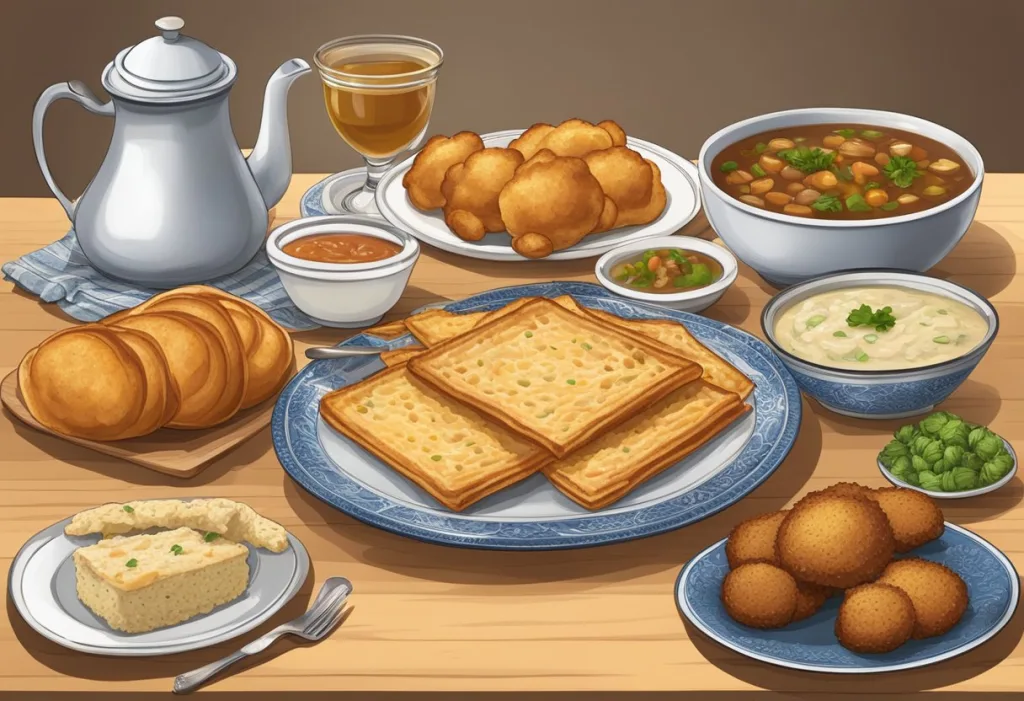
At the heart of Jewish cuisine lie ingredients and recipes passed down through the ages, with each region adding its unique touch. Across different continents, traditional staples such as stuffed cabbage, brisket, and bagels have been adapted and treasured. As Jewish communities migrated and settled around the world, local ingredients and customs were woven into traditional foods, resulting in a dynamic and continuously evolving feast that is as varied as the diapora itself.
Explore other national cuisines.
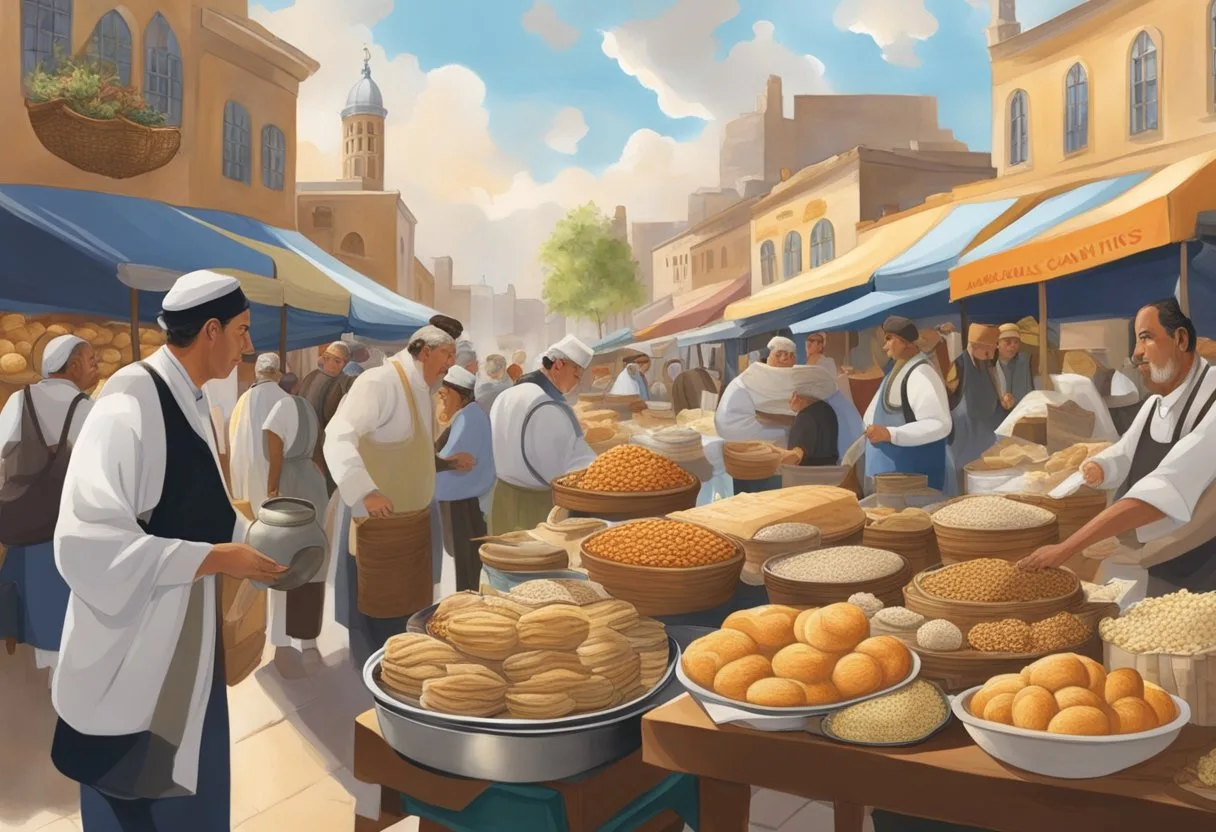
Jewish cuisine is a reflection of the complex interplay between tradition, local ingredients, and historical influences that have shaped it since ancient times.
In ancient Israel, the diet was largely vegetarian due to the agrarian society, with a focus on ingredients like olives, figs, and grains. Specific preparations from this era have been pivotal, such as the combination of layered dough and honey akin to an early form of baklava.
As Jews migrated or were exiled over centuries, they carried their culinary traditions with them. In their new homes, they adapted to the local cuisines while adhering to kashrut, the Jewish dietary laws, creating a diverse tapestry of Jewish cuisine worldwide. The prolific integration of Sephardic recipes within Israeli fare, derived from Jews of Spanish and Portuguese descent, is a testament to this phenomenon.
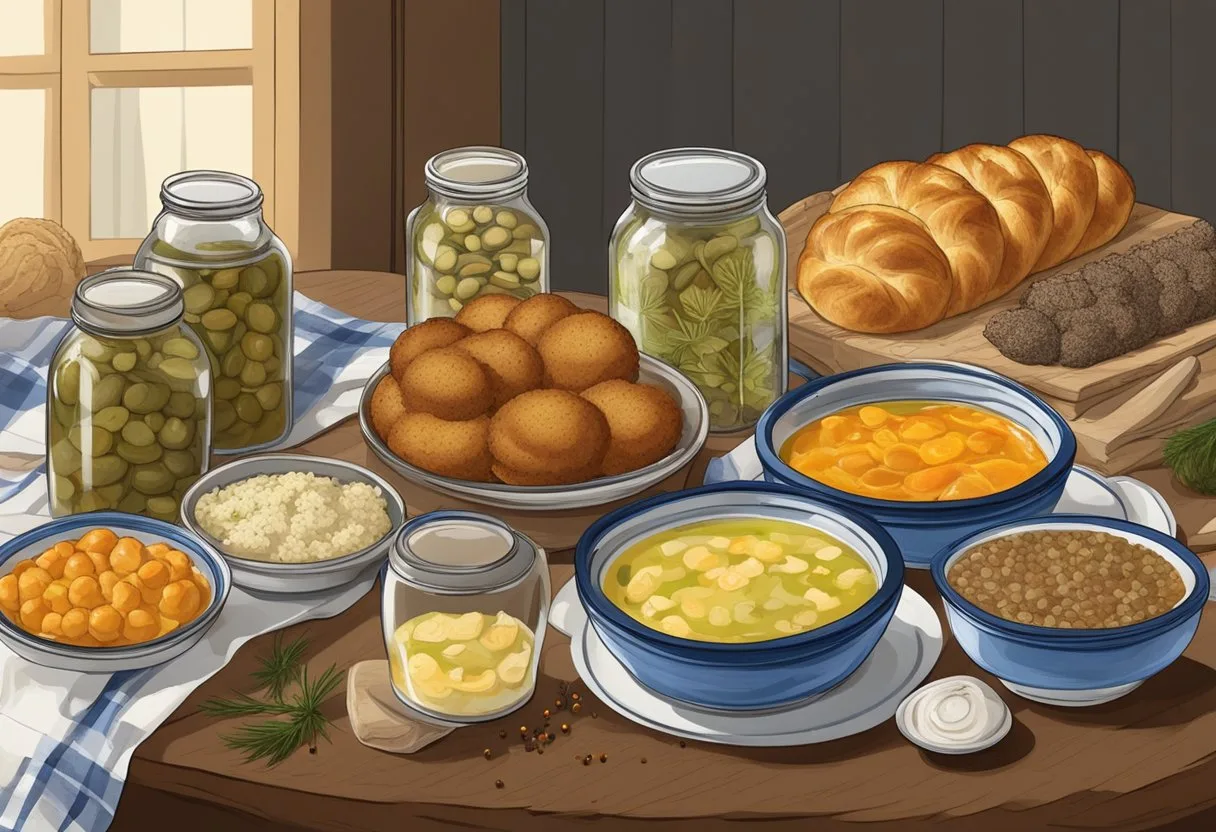
The culinary traditions of Jewish cuisine are deeply rooted in the use of specific basic ingredients. These define the flavor profiles and textures that are characteristic of Jewish dishes.
Matzo meal, the ground form of matzo, is a foundational grain used in numerous Jewish recipes, particularly around Passover. A variety of Jewish dishes, from matzo ball soup to kugels, depend on this simple but versatile ingredient. Another important grain is challah bread, which is made from wheat and often enjoyed during the Sabbath and holidays.
Proteins in Jewish cuisine range from beef and chicken to fish like salmon and herring. Chicken is commonly used in soups and main dishes. Dishes such as gefilte fish, which often includes a mix of ground fishes, hold a notable place particularly in Ashkenazi Jewish traditions.
Vegetables like carrots, onions, and potatoes are regularly used, with potatoes being a primary ingredient in latkes. Fruits are also integral, for instance, apples are commonly paired with honey during Rosh Hashanah for a sweet New Year, and dates are used in both savory and sweet dishes.
Schmaltz, or rendered chicken fat, is a traditional fat that imparts a distinct flavor in many Jewish dishes. For those who keep kosher or prefer plant-based options, olive oil is another widely used fat both for cooking and in ceremonial practices.
Spices such as paprika and garlic are staples in Jewish cuisine, enhancing the taste of a wide range of dishes. Seasonings like dill and parsley are often used for their fresh, herbal notes, scene in matzo ball soup and various salads.

Jewish cuisine is an amalgamation of cooking traditions from communities across the world, each with its own regional flair and customs. The following subsections will explore some of the most cherished traditional dishes from different Jewish backgrounds.
Ashkenazi cuisine stems from the Jewish communities of Central and Eastern Europe, and its dishes are often hearty and comforting. Challah, a braided bread, is a staple at the Shabbat table, while latkes, grated potato pancakes, are synonymous with Hanukkah celebrations commonly served with applesauce or sour cream. Another renowned Ashkenazi dish is matzo ball soup, sometimes called "Jewish penicillin" due to its soothing qualities, especially when served with a rich chicken broth.
Sephardic Jews trace their roots to Spain, Portugal, and North Africa, bringing flavors that are aromatic and often spiced. Shakshuka, eggs poached in a tomato and pepper stew, often incorporates cumin and paprika. Bourekas are flaky pastries filled with cheese, potato, or spinach. They are often enjoyed as a snack or a light meal.
The Jews of the Middle East and Central Asia, the Mizrachi, offer a cuisine rich in spices and fresh produce. Sabich sandwiches eggplant, hard-boiled eggs, and tahini sauce in pita and kubbeh, comprising bulgur wheat shells filled with spiced meat, reflecting the savory flavors preferred in Mizrachi dishes.
Jewish holidays boast a variety of special foods that carry symbolic meaning. On Passover, matzo is consumed to commemorate the unleavened bread eaten by Jews while fleeing Egypt. During Rosh Hashanah, apples and honey are eaten for a sweet new year, and sufganiyot (jelly doughnuts) and gelt (chocolate coins) are traditional treats enjoyed during Hanukkah.
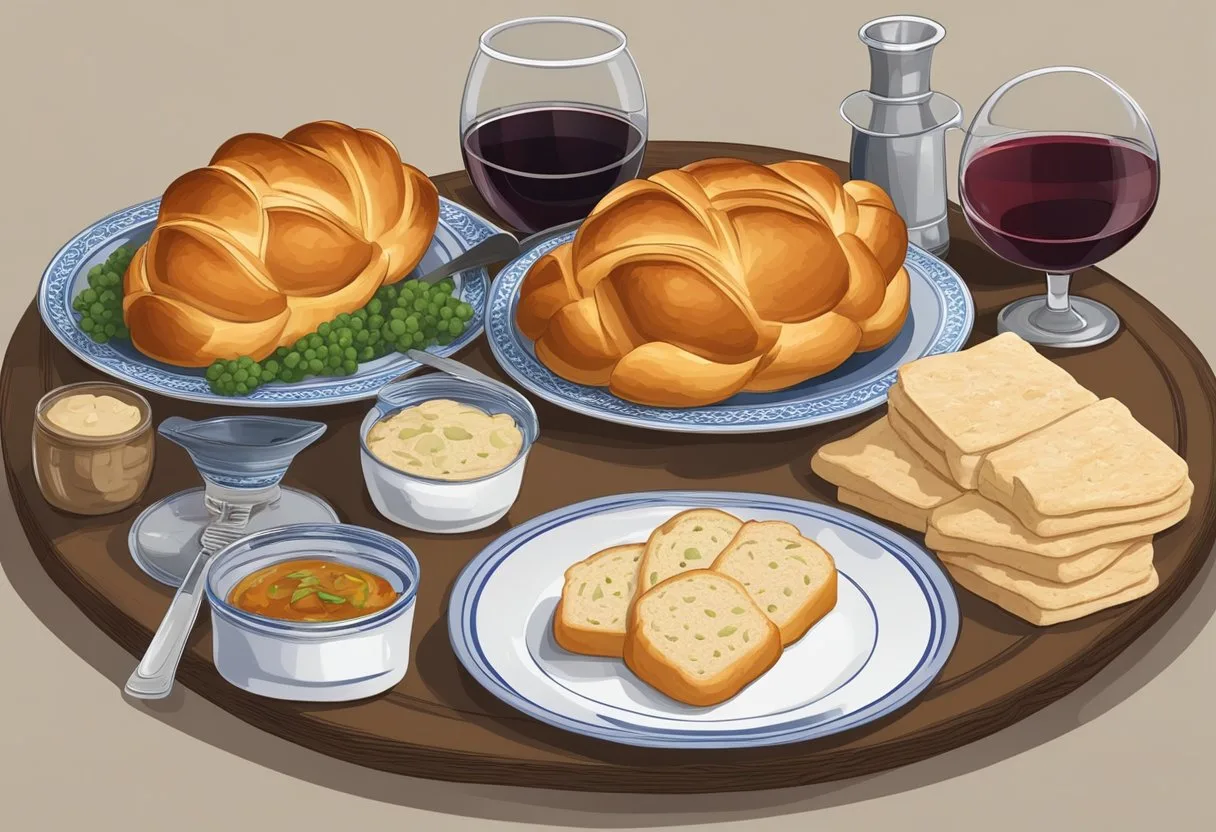
Jewish cuisine is intrinsically linked to the religious laws governing which foods are permissible or "kosher." These laws impact food preparation, consumption, and handling within Jewish communities worldwide.
Kashrut, the set of Jewish dietary laws, dictates that only certain foods may be consumed and outlines how they must be prepared. Foods labeled as kosher must conform to the religious texts, notably the Torah, specifically Leviticus 11 and Deuteronomy 14. Meat from approved animals that have been slaughtered in the prescribed manner, known as shechita, and dairy products from kosher animals are examples of food that can be kosher. However, kosher certification is an additional verification process to ensure compliance with these laws.
Kosher certification involves a detailed and rigorous process performed by rabbinical authorities. This certification ensures that food products, kitchen appliances, and even restaurants meet all the requirements of kashrut. The presence of a kosher symbol on packaging signifies to consumers that a qualified rabbi or kashrut organization has overseen the production process and certified that the product is fit for consumption according to Jewish law. Each kosher symbol corresponds to a different certifying agency.
A cornerstone of kashrut is the separation of meat and dairy. Jewish dietary laws stipulate not only that they cannot be eaten together but also that they require separate utensils, dishes, and preparation areas. The wait time after consuming meat before dairy can be eaten varies among different Jewish communities, with a common standard being six hours. This segregation is rooted in the interpretation of biblical verses that prohibit cooking a goat in its mother's milk.
For further understanding of these dietary practices, one can explore the Jewish dietary laws on Jewish Virtual Library, Wikipedia, WebMD, Britannica, or My Jewish Learning.
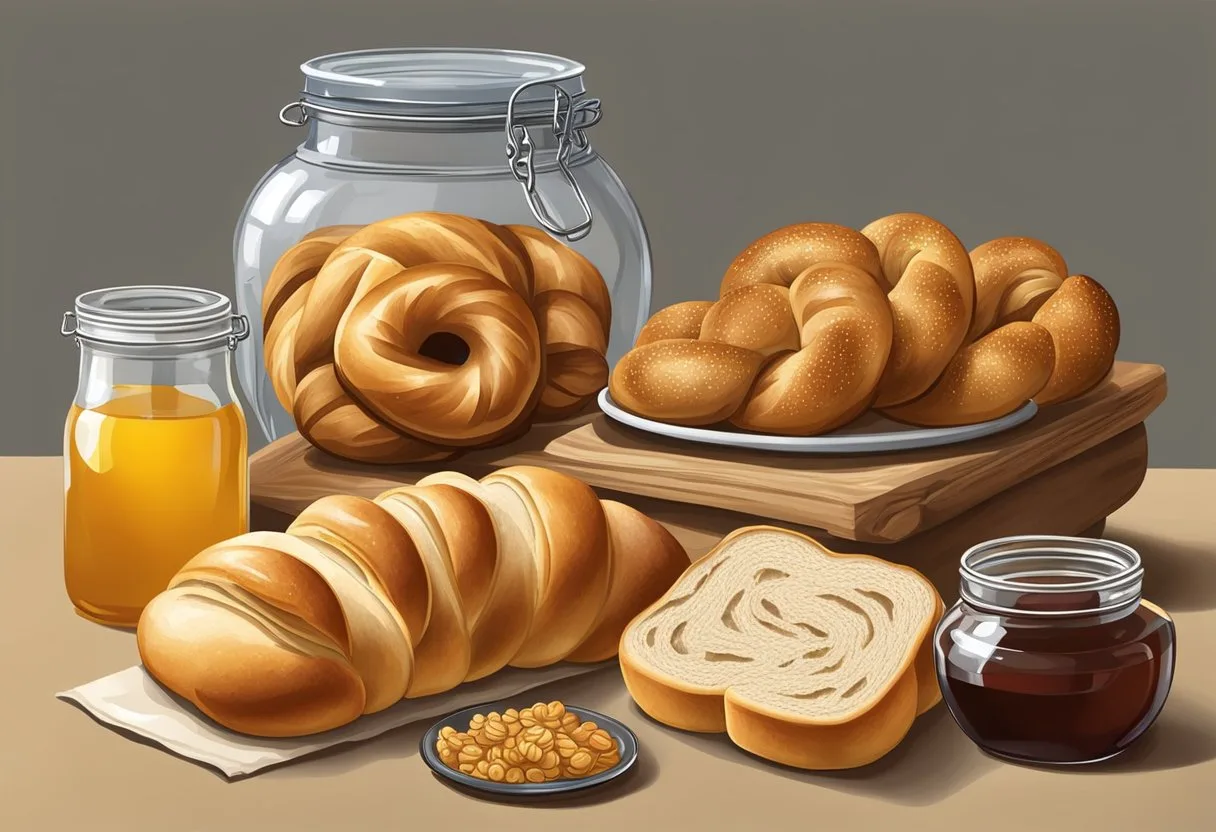
In Jewish cuisine, bread and baked goods are not only staples but also carry significant cultural and religious symbolism. The variety ranges from everyday items to specialties for Sabbath and holidays.
Challah is a rich, braided bread typically enjoyed on the Sabbath and Jewish holidays. Distinct for its glossy, golden crust and soft, pillowy interior, Challah is often made with eggs, sugar, and sometimes raisins for a hint of sweetness.
Bagels, a dense and chewy ring-shaped bread, have origins in Jewish communities of Eastern Europe. Renowned for their glossy exterior, bagels come from being boiled before baking. Popular toppings include sesame and poppy seeds.
Jewish pastries encompass a variety of sweet and savory items, often rooted in Ashkenazi traditions. One can find pastries like rugelach, small crescent-shaped pastries filled with ingredients such as chocolate, nuts, or fruit. Another typical pastry is hamantaschen, triangular filled pockets traditionally eaten during the Purim festival.
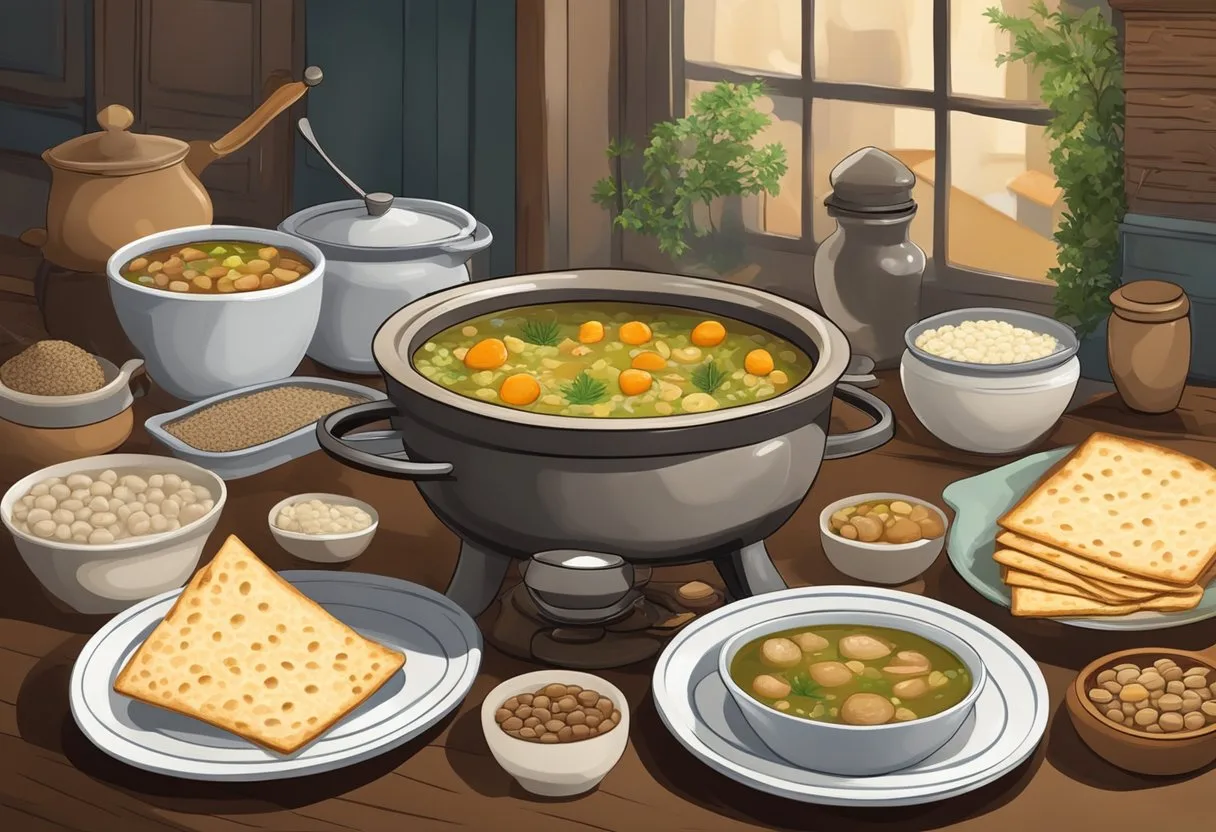
Jewish cuisine presents a variety of hearty and comforting soups and stews, each with its own history and traditional cooking methods. They are not only nourishing but also embody a rich cultural heritage.
Matzah ball soup, often called "Jewish penicillin," is a quintessential dish in Jewish cuisine, especially during Passover. The soup features light and fluffy matzah balls, made from a mixture of matzah meal, eggs, water, and fat, floating in a clear chicken broth, often with carrots and celery.
Cholent is a traditional Jewish stew that dates back to the times when cooking on the Sabbath was prohibited. Prepared on Friday and left to cook slowly overnight, this stew typically contains meat, potatoes, beans, and barley, delivering a potent flavor developed over many hours.
Although not exclusively Jewish, Tagine has become a beloved dish among Sephardic Jews, particularly those from North African descent. This slow-cooked stew is often made with chicken or lamb and is infused with aromatic spices like cumin, coriander, and cinnamon, along with dried fruits for a subtle sweetness.

Jewish culinary tradition boasts a range of sweets and desserts known for their unique flavors and cultural significance. These treats are typically associated with holidays and family gatherings, highlighting the community's love for shared meals and celebration.
Babka is a twisted, yeast-risen bread, often swirled with rich fillings such as chocolate or cinnamon. It originated in Eastern Europe and has become a staple in Jewish bakeries around the world. The chocolate babka is particularly popular, featuring layers of dough interspersed with chocolate spread, baked until golden brown.
Rugelach, small crescent-shaped pastries, are made from a cream cheese dough and generously filled with ingredients like jam, chocolate, nuts, or fruit preserves. Different fillings can be used to tailor the flavor to the occasion. Here's a recipe including cinnamon, walnuts, and golden raisins, offering a sweet, nutty taste encased in a flaky exterior.
Halva is a dense, sweet confection typically made from tahini (sesame paste) or sunflower seeds. It comes in many forms and flavors, but its crumbly and slightly sandy texture combined with a sweet taste makes it an instantly recognizable treat in Jewish and Middle Eastern cuisine. Its variations are countless, sometimes incorporating nuts, chocolate, or swirls of caramel.
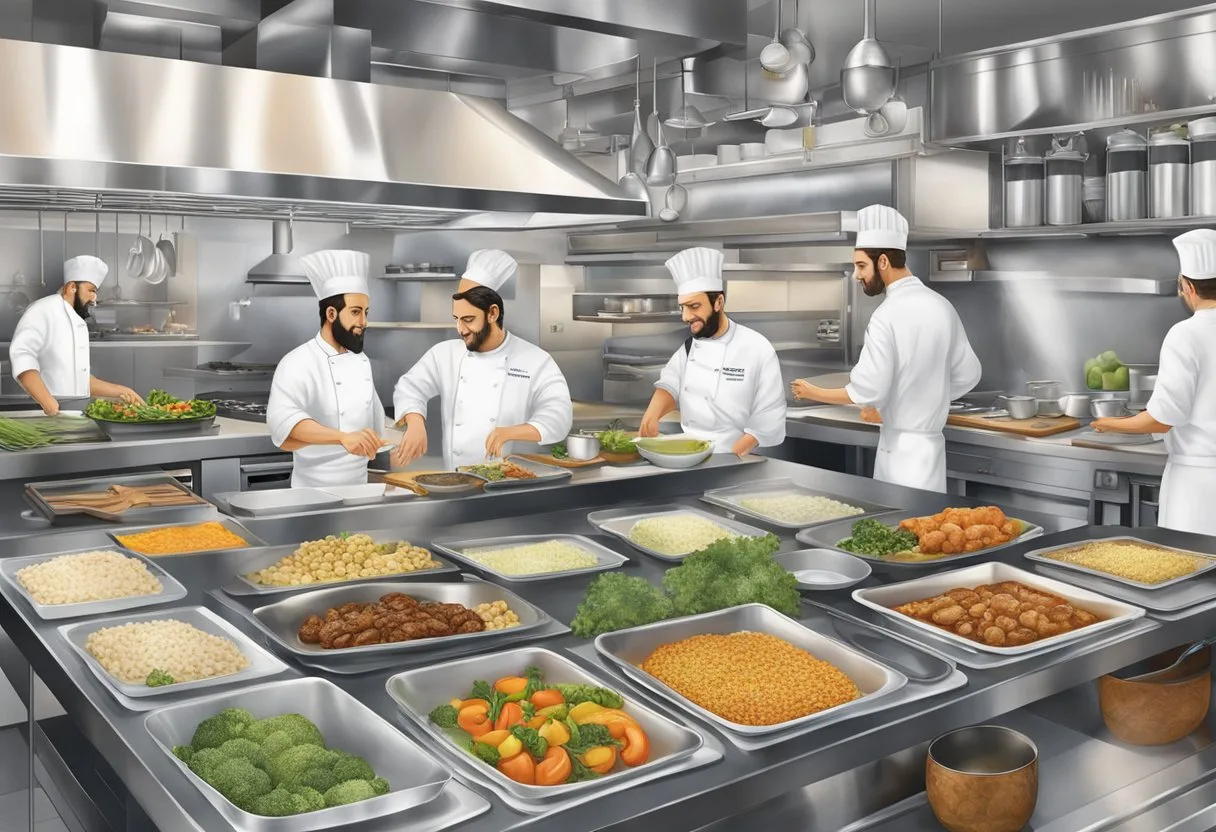
Jewish cuisine is evolving, influenced by global trends and a renewed interest in traditional flavors. This section explores the notable shifts in how Jewish food is prepared and perceived in modern contexts.
Israeli cuisine has seen a resurgence, moving beyond classic dishes to include innovative uses of local ingredients. Renowned chefs are bringing a creative twist to traditional recipes, such as using tamarind—with a history in Jewish culinary traditions—into contemporary dishes, creating diverse flavor profiles that honor cultural history while embracing modern tastes.
Chefs are marrying Jewish cuisine with elements from various culinary traditions, resulting in exciting fusion foods. Examples include blending Ashkenazi staples with South American flavors or incorporating Asian techniques into Sephardic dishes. This cross-cultural exchange is redefining kosher food in cities like New York and Miami, as seen on CNN, where restaurants are broadening the scope of Jewish flavors more than ever before.
The rise of plant-based eating has significantly impacted Jewish cooking. Traditional dishes are being reimagined to accommodate vegetarian and vegan diets without sacrificing the essence of the cuisine. The use of all-natural ingredients such as mushrooms adds variety and quality to vegan versions of classics, including dishes like chickpea sambusak and carrot lox.

Jewish cuisine offers a diverse array of flavors across restaurants and street food venues. From deli counters to quick-service stands, the culinary landscape is rich with tradition and innovation.
Delis are a cornerstone of Jewish culinary tradition, especially in cities like New York and Dallas, where they serve an array of classic dishes. Patrons can expect to find corned beef sandwiches, matzo ball soup, and bagels with lox. These establishments are not just food outlets; they're cultural landmarks where generations gather for a taste of culinary heritage.
Falafel stands are synonymous with Israeli street food, offering crispy chickpea balls tucked into pita bread with salads and tahini. These stands provide quick, affordable, and nutritious meals, making falafel a popular choice among locals and tourists alike for a casual yet satisfying eat.
Shawarma shops, often found in bustling markets and urban corners, offer savory spiced meat, traditionally cooked on a rotating spit and served with accompaniments like hummus and tabbouleh. Whether enjoyed in a sandwich or on a platter, shawarma is a testament to the region's love for slow-cooked, well-seasoned meats.

Jewish cuisine holds a tapestry of flavors and traditions shaped by thousands of years of history. One of the cornerstones of home cooking within this culture is Challah, a braided bread savored during Sabbath and holidays. Families often bake their own loaves, using recipes passed down through generations.
Latkes, crispy potato pancakes, are a highlight in Ashkenazi Jewish households, especially during Hanukkah. Made from grated potatoes and onions, they're fried until golden and served with applesauce or sour cream.
Below is a basic ingredient list for latkes:
Another classic dish is matzo ball soup, a comforting broth often made with chicken and garnished with dumplings. Key ingredients include matzo meal, eggs, water, and a pinch of salt, combined to form light, airy balls that float in the homemade stock.
For those exploring Jewish cuisine, here's a brief list of dishes to try cooking:
The practice of making these dishes at home not only serves to fulfill traditional roles but also provides a means to gather and reinforce family bonds. Whether it's preparing for a festive occasion or simply enjoying the staples of Jewish culinary heritage, home cooking is an intimate and valued facet of Jewish life.

Jewish festivals are rich with food customs that symbolize historical events and religious principles. Passover is observed by eating unleavened bread called matzah, representing the Israelites' hasty departure from Egypt. Seder meals include symbolic foods like bitter herbs and charoset (a sweet paste signifying the mortar used by Jewish slaves).
During Rosh Hashanah, sweet foods like apples dipped in honey are consumed, expressing hopes for a sweet new year. On Yom Kippur, there's a pre-fast meal and a break-fast meal, often including light foods such as bagels and lox after the fast ends.
Hanukkah is celebrated with oily foods like latkes (potato pancakes) and sufganiyot (jelly doughnuts), commemorating the miracle of the Temple oil. The crispy sizzle of latkes frying can be heard in many Jewish homes during this festival.
Shavuot involves the eating of dairy products, symbolizing the "land flowing with milk and honey" and the giving of the Torah, which is likened to milk.
Here is a brief overview of traditional Jewish holiday foods:
| Festival | Food Custom |
|---|---|
| Passover | Matzah, bitter herbs, charoset |
| Rosh Hashanah | Apples and honey, round challah |
| Yom Kippur | Pre-fast meal, light break-fast meal |
| Hanukkah | Latkes, sufganiyot |
| Shavuot | Cheesecake, blintzes, dairy products |
Each holiday's food customs are woven into the fabric of Jewish cultural and religious life, serving as a vehicle to recall the past, celebrate the present, and honor the continuity of Jewish tradition.
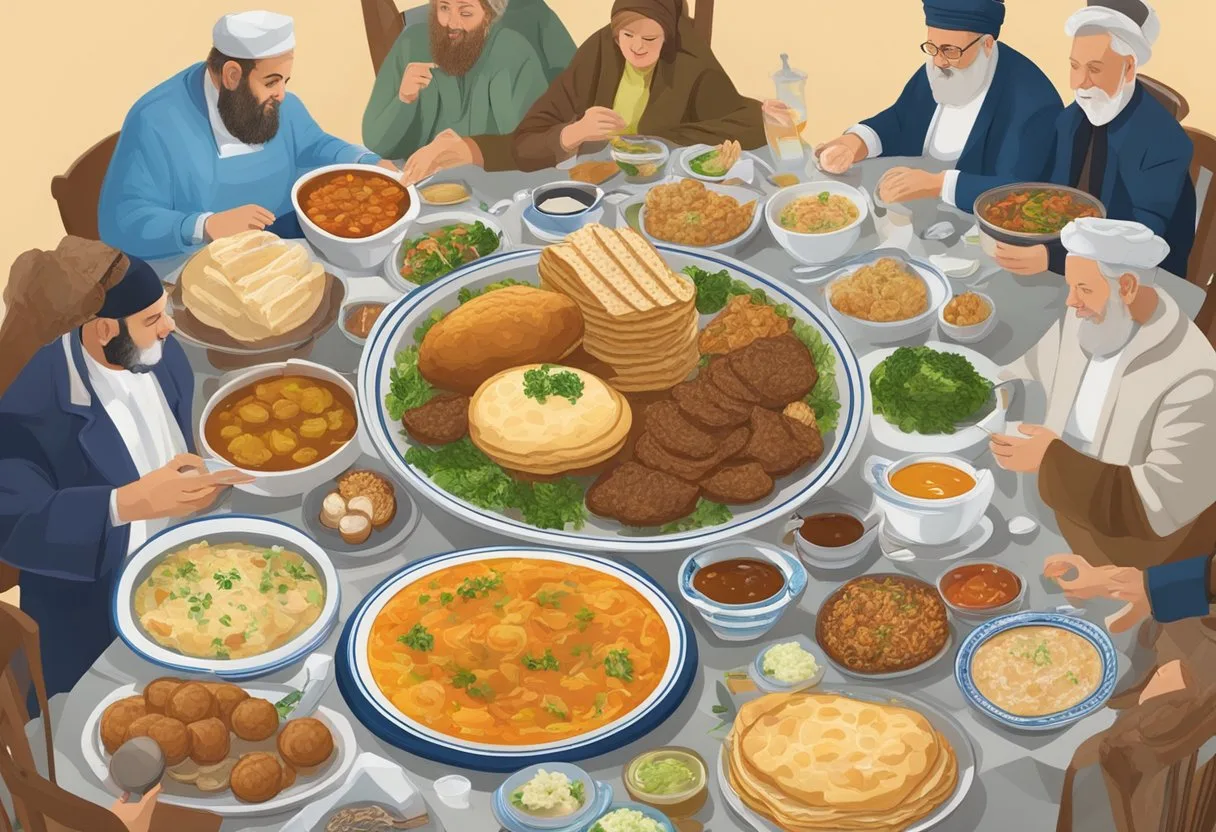
This section addresses some of the most common inquiries regarding Jewish culinary traditions, providing insights into traditional dishes, comfort foods, dietary laws, and the evolution of Jewish cuisine.
Traditional Jewish dishes often reflect the diverse heritage of the Jewish people, with staples including bagels, knishes, and borscht from Ashkenazic traditions. Sephardic cuisine offers distinct flavors in foods like shakshuka and couscous.
Comfort food in Jewish traditions varies by region, but Ashkenazic comfort foods often include matzah ball soup and kugel, while Sephardic cuisine features warm, spiced stews such as cholent, which are enjoyed on Shabbat.
A typical Jewish dinner could include a variety of dishes such as brisket, roasted chicken, gefilte fish, and sides like tzimmes and latkes. During specific holidays, other traditional foods such as matzah during Passover and sufganiyot on Hanukkah are served.
A kosher diet involves a set of biblical dietary laws including the prohibition of consuming pork and shellfish, the separation of meat and dairy products, and the requirement for meat to be slaughtered and prepared in a specific manner. Kosher foods also exclude certain animal by-products and necessitate the use of separate kitchenware for meat and dairy.
Jewish cuisine has evolved through the diaspora as Jews have migrated and settled in different regions, each influencing the culinary landscape with local ingredients and customs. From the medieval Spanish and Portuguese cuisines to the integration of Eastern European flavors, Jewish food continually incorporates new influences while preserving traditional recipes.
Classic recipes from Jewish heritage include dishes such as challah bread, potato latkes, blintzes served on Shavuot, and various types of pickled and fermented foods. Each recipe carries cultural significance and is often linked to religious rituals or historical events.
